
CONCACAF's Finest Hour: Mexico's R16 Run Defines a Continent's World Cup
In a tournament won by France, the CONCACAF region found its narrative in Mexico's journey to the knockout stage—a steady, purposeful campaign that showcased the region's depth and ambition.

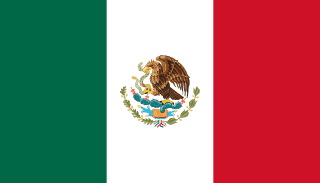
When Mexico's campaign ended in the Round of 16 against England, the CONCACAF region's World Cup story had already been written in indelible ink. From Santiago Giménez's opening salvo against South Africa—a brace that set the tone—to Raúl Jiménez's crucial late goals throughout the tournament, Mexico advanced through Group A with nine points, topping a field that included South Korea and Czech Republic. It was a performance built on clinical finishing and the kind of midfield control that has long eluded the confederation's representatives on the global stage.
Mexico's path through the group phase was methodical. They opened with a 3–1 victory over South Africa (2026-001), then edged South Korea 2–1 in a tighter affair (2026-028), before dispatching Czech Republic 2–1 to secure top spot (2026-053). Giménez's six goals across the tournament placed him among the competition's most prolific strikers, a reminder that CONCACAF's attacking talent has matured considerably. When they faced England in the knockout round, the script nearly held—until Jude Bellingham's intervention in the 58th minute shifted momentum (2026-092). A 2–1 defeat was no disgrace; it was the kind of result that suggests Mexico has finally arrived as a consistent contender rather than a perennial dark horse.

Canada and the United States, meanwhile, told a different story. Canada reached the Round of 32 after a respectable group showing, with Jonathan David emerging as a genuine tournament star—eight goals across the competition, second only to Mbappé. Yet they fell to Morocco in the knockout phase (2026-090). The USMNT, despite Christian Pulisic's contributions, finished second in a competitive Group D and suffered a heavy defeat to Argentina in the Round of 16 (2026-095), a reminder that the gap between ambition and execution remains real.
For CONCACAF as a whole, Mexico's presence in the knockout rounds represented validation. The confederation produced no semifinalists and no champions, but it produced a team that competed with poise, scored with precision, and bowed out only to a side—England—that would itself fall short of the ultimate prize. In a tournament where France ultimately prevailed and the usual powerhouses reasserted themselves, Mexico's steady progress through to the Round of 16 was the region's signature achievement: not revolutionary, but solid, credible, and a foundation upon which future ambitions can be built.
Related Matches



AI-generated predictions — not real results. Not affiliated with FIFA, its member associations, teams or players.