Group Stage Reckoning: The Predictions That Shaped the Bracket
As the AI model's group-stage simulations concluded, the contours of the 2026 World Cup emerged in full clarity. Here's how the early rounds sorted the titans, the rising powers, and the heartbreakers.
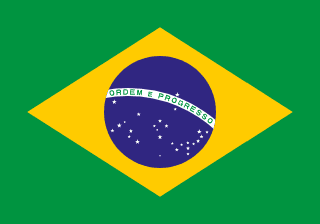
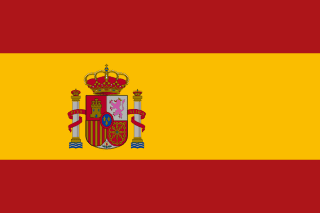
The first eighteen days of the 2026 World Cup delivered what the AI model had foreseen with remarkable consistency: a group stage that sorted the elite from the rest with clinical precision. France topped Group I with 9 points and a +8 goal differential, anchored by an extraordinary Kylian Mbappé, who would go on to score 13 goals across the tournament. Brazil dominated Group C with the same 9-point tally, their +7 goal margin built on Vinícius Júnior's seven goals and the relentless attacking verve that would carry them deep into the knockout rounds. Spain's Group H was perhaps most dominant of all: 9 points, +9 goals, their young talents—Lamine Yamal and Dani Olmo chief among them—already announcing themselves as tournament threats.
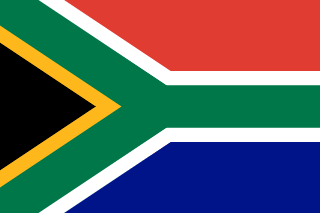
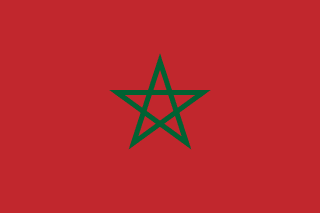
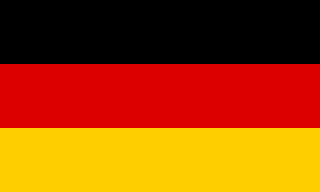
But the group stage was not merely a coronation of the expected powers. Mexico's 3–1 victory over South Africa (2026-001), with Santiago Giménez scoring twice, set the tone for their own march to the knockout rounds atop Group A. Germany's 5–0 demolition of Curaçao (2026-010) in Group E signalled they would be no mere quarter-final exit. England's methodical progression through Group L—including a 3–1 win over Ghana (2026-045) anchored by Harry Kane—suggested the Three Lions had finally constructed the tournament template their talent promised. And yet surprises lurked within the data: Senegal's 2–2 draw with Norway (2026-041) in Group I cost them a group win that France claimed; Morocco's +4 differential in Group C positioned them as dark horses rather than also-rans.
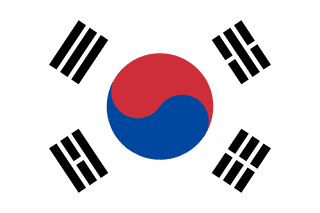
The model's predictions revealed the tournament's true sorting mechanism: not upset victories but rather the ruthless consistency of the highest tier. Canada's 2–1 win over South Korea (2026-073) in the Round of 32 would later be remembered as a watershed moment for the CONCACAF side, Jonathan David's two goals the signature of a player ascending. Argentina's 9-point campaign in Group J, built on Lionel Messi's enduring brilliance and Julián Alvarez's emerging star power, foreshadowed their eventual path to the final. Belgium's 9 points in Group G, driven by Kevin De Bruyne and Romelu Lukaku, suggested another deep run for the Red Devils.
Three teams—South Africa, Qatar, and Curaçao—failed to earn a single point, their eliminations both mathematically certain and narratively inevitable. Yet the group stage's true drama lay not in the eliminations but in the hierarchies it established. Portugal and Colombia emerged from Group K with identical 7-point records, their 2–2 draw (2026-071) a microcosm of the tournament's competitive intensity. Turkey and the United States both claimed 6 points in their respective groups, setting up a knockout bracket where the seedings would matter deeply.
By the time the final group matches concluded, the AI model's predictions had crystallized into a bracket of 16 qualifiers that would prove both familiar and subtly reconfigured. France, Brazil, Spain, Germany, Argentina, England, Belgium, and Portugal represented the expected core. But Canada's emergence from the CONCACAF chaos, Senegal's grit in Group I, Morocco's fourth-place finish in Group C that still earned a Round of 32 berth, and Turkey's Group D triumph all hinted at a tournament where the margins between glory and elimination were measured in tenths of a goal differential.
Related Matches



AI-generated predictions — not real results. Not affiliated with FIFA, its member associations, teams or players.