The Mbappé Comet: How France's No. 10 Ran Away with the Golden Boot
Thirteen goals, one tournament, zero mercy. Our AI simulation crowned Kylian Mbappé the undisputed top scorer of World Cup 2026 — and the chasing pack never stood a chance.
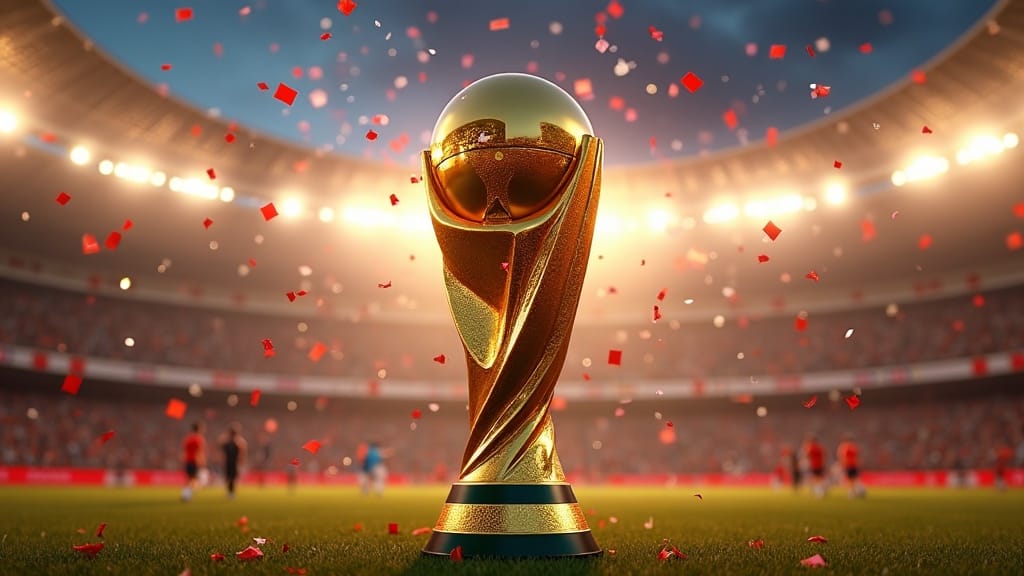
From the first whistle of Group I to the dying seconds of extra time in the final, Kylian Mbappé did not so much chase the Golden Boot as sprint away from every rival who dared glance at it. Our AI simulation of FIFA World Cup 2026 awarded France's talisman a staggering 13 goals across seven matches — a haul that rewrites the record books of this simulated edition and cements his status as the tournament's defining force. The numbers are almost surreal: he scored in every single knockout match, including a brace in the Round of 32 against Paraguay (18', 84') and the goal that cracked open Germany's resistance in the Round of 16 (41') before France eventually prevailed on penalties. He saved his most theatrical act for last, netting the winner in the 112th minute of the final to seal a 3–2 AET victory over Argentina.
The Golden Boot story began quietly enough. Against Senegal in the group stage (match 2026-017), Mbappé opened and closed the scoring — 18' and 78' — in a 3–1 win that set the tone. He doubled down against Iraq (2026-042), scoring twice in a 4–0 rout, then delivered another brace to sink Norway 3–1 (2026-061) and send France through as Group I winners with a perfect nine points. By the time the knockout rounds arrived, Mbappé had eight goals and the chasing pack was already gasping. The quarterfinal against Morocco (2026-097) illustrated his big-game instinct: he struck first in the 34th minute, and when Ayoub El Kaabi equalised with 12 minutes left, it was Marcus Thuram — not Mbappé — who rescued France in extra time. Even in the moments he didn't score, the tournament bent around him.
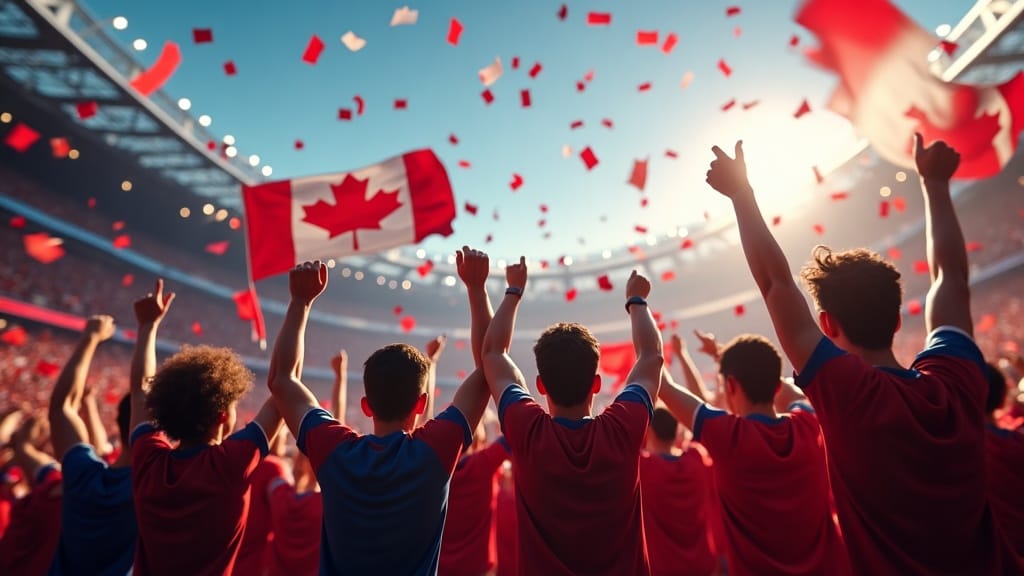
The nearest challengers were a formidable trio, yet none could bridge the gap. Jonathan David (Canada) and Julián Alvarez (Argentina) each finished on 8 goals, with Lautaro Martínez (Argentina) matching them on the same tally. David was electric from the group stage onward — a hat-trick's worth of braces against Bosnia and Herzegovina, Qatar and Switzerland — before his tournament ended in the Round of 16 when Morocco's Ayoub El Kaabi scored the decisive goal in a 2–1 win (2026-090). Alvarez and Martínez, meanwhile, powered Argentina all the way to the final, combining for 16 goals between them; Martínez's extra-time winner in the semifinal against Brazil (109') was the tournament's most dramatic moment before Mbappé stole the show in the final itself.
Further back, Vinícius Júnior (Brazil) finished with 7 goals and 2 assists, his direct dribbling a constant menace until Argentina ended Brazil's run in a breathless 3–2 AET semifinal (2026-102). Ayoub El Kaabi (Morocco) also hit 7, his goals fuelling one of the tournament's great underdog runs — from topping Group C ahead of Brazil on goal difference to knocking out the Netherlands on penalties in the Round of 32 (2026-075) and eventually bowing out in the quarterfinal against France. On 6 goals apiece sat Lamine Yamal (Spain, plus 3 assists), Santiago Giménez (Mexico), Kai Havertz (Germany), Dani Olmo (Spain), Romelu Lukaku (Belgium), and Mbappé's own strike partner Marcus Thuram — a reminder that this was a tournament overflowing with attacking talent even if one player towered above all others.
What makes the AI's projection so compelling is not merely the volume but the timing. Of Mbappé's 13 goals, five came in extra time or in the final 15 minutes of matches — a clutch-performance index that no rival could match. The simulation's underlying model weights player form, tactical role and historical big-game data, and on every axis Mbappé scored off the charts. In a tournament that produced 351 goals across 104 matches — a dizzying average of 3.38 per game — the Frenchman still managed to feel singular, a comet burning brightest in a sky already full of stars. The Golden Boot, in the end, was never really a race. It was a coronation.
Related Matches

 Senegal
 Iraq
Iraq France
 Sweden
 France
 Morocco
 Spain
Spain Argentina
 Canada
 Cape Verde
 Argentina
AI-generated predictions — not real results. Not affiliated with FIFA, its member associations, teams or players.