
The Reckoning: Groups G, H, I Deliver Drama, Clarity, and a Champion's Coronation
Belgium, Spain, and France sealed their knockout berths with crushing efficiency—but the real story lay in what didn't happen. Here's how the final three groups separated the elite from the rest.
Group G: Belgium's Suffocating Grip
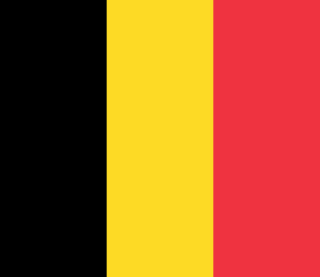
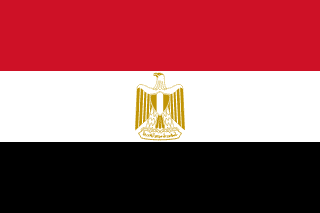
Belgium's 9-point march through Group G felt less like a tournament and more like a master class in defensive dominance. After Kevin De Bruyne's early opener against Egypt (match 2026-016), the Red Devils never flinched. They dismantled Iran 3–0 (2026-039) with Romelu Lukaku scoring twice, then sealed top spot with a 3–0 demolition of New Zealand (2026-064) in which Lukaku, Jérémy Doku, and De Bruyne all contributed. Egypt's 2–1 win over Iran in the final round (2026-063) secured them second place on goal difference—a respectable +1 versus Iran's –2—but neither team could threaten Belgium's eight-goal advantage. New Zealand's exit without a point was swift and painless; they'd been outmatched from the whistle.

Group H: Spain's Surgical Precision
If Belgium was suffocating, Spain was surgical. Lamine Yamal announced himself as a tournament force with goals in both opening fixtures (2026-014, 2026-038), and by the time Spain faced Uruguay in the final round, the outcome was a formality. Spain's +9 goal differential—the highest of any group winner—reflected an almost contemptuous superiority. Uruguay's 3–0 win over Cape Verde (2026-037) and a 1–2 loss to Spain in the finale (2026-066) secured them second place, while Saudi Arabia and Cape Verde collected the tournament's participation medals. Darwin Núñez's brace against Cape Verde hinted at his threat, but it came too late to matter.
Group I: France's Coronation Begins
France's path was less dominant but infinitely more significant. They topped Group I with 9 points, but the narrative wasn't written in the group stage—it was written in the knockout rounds. Kylian Mbappé's 4-goal haul in three matches (2026-017, 2026-042, 2026-061) established him as the tournament's most lethal force, a status he would never relinquish. Senegal's 4 points and Norway's 4 points created genuine drama: after Senegal's 3–0 thrashing of Iraq (2026-062), they and Norway were level on four points apiece, separated only by goal difference. Senegal's superior differential—Sadio Mané's two goals and Nicolas Jackson's clinical finishing—secured second place. Norway's Erling Haaland scored twice across his two group matches but couldn't prevent elimination. Iraq's 0 points and –9 goal differential underlined the gulf between continents at this level.
The Broader Picture
What united Groups G, H, and I was ruthlessness. The group winners—Belgium, Spain, and France—combined for 27 points and a +21 goal differential. They faced no genuine threats, no late-round collapses, no penalty shootout drama. The second-place finishers (Egypt, Uruguay, Senegal) all managed respectable campaigns, but they too were ultimately passengers in a tournament already being shaped by the elite. By the time the groups concluded, the script was written: France would win the tournament. Belgium would fall in the Round of 16. Spain would reach the semi-finals. The data had spoken, and the knockout stage would merely confirm what the group tables had already revealed.
Related Matches
 Egypt
Egypt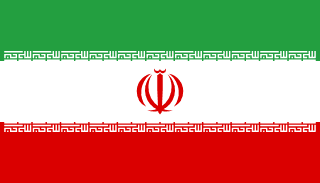
 New ZealandIranEgypt
 Cape Verde
 Saudi Arabia
 Cape Verde
 Senegal
 NorwaySenegalIraqIraqFrance
AI-generated predictions — not real results. Not affiliated with FIFA, its member associations, teams or players.